Turn strategy into lived reality
Most organizations don't struggle because they lack strategy. They struggle because people experience something different from what leadership intends.
The strategy exists. It just doesn't show up in how people work together, make decisions, or speak about the company when leadership isn't in the room.
That distance is where I work.
How I work
I start by listening. Not to what you want to say, but to what is actually going on.
I interview leadership. Then I talk to the people who have to live with the decisions. I am looking for contradictions, not data. The place where the official version and the real version stop matching.
People are honest with me because I have no stake in the answer and no power over anyone's career. That is the whole advantage, and it is why I hear things an employee survey never will.
Then I make it visible. Not a hundred-page report. The three or four things that are actually true, said plainly enough that a leadership team can act on them.
This is for you if:
Your strategy is clear on paper but doesn't show up in how people work.
Your brand promises one thing and your people experience another.
You have been through a change — new leadership, new strategy, a merger — and people aren't moving with it.
You suspect you are not being told the whole truth.
You want an honest conversation, not another slide deck.
What is looks like
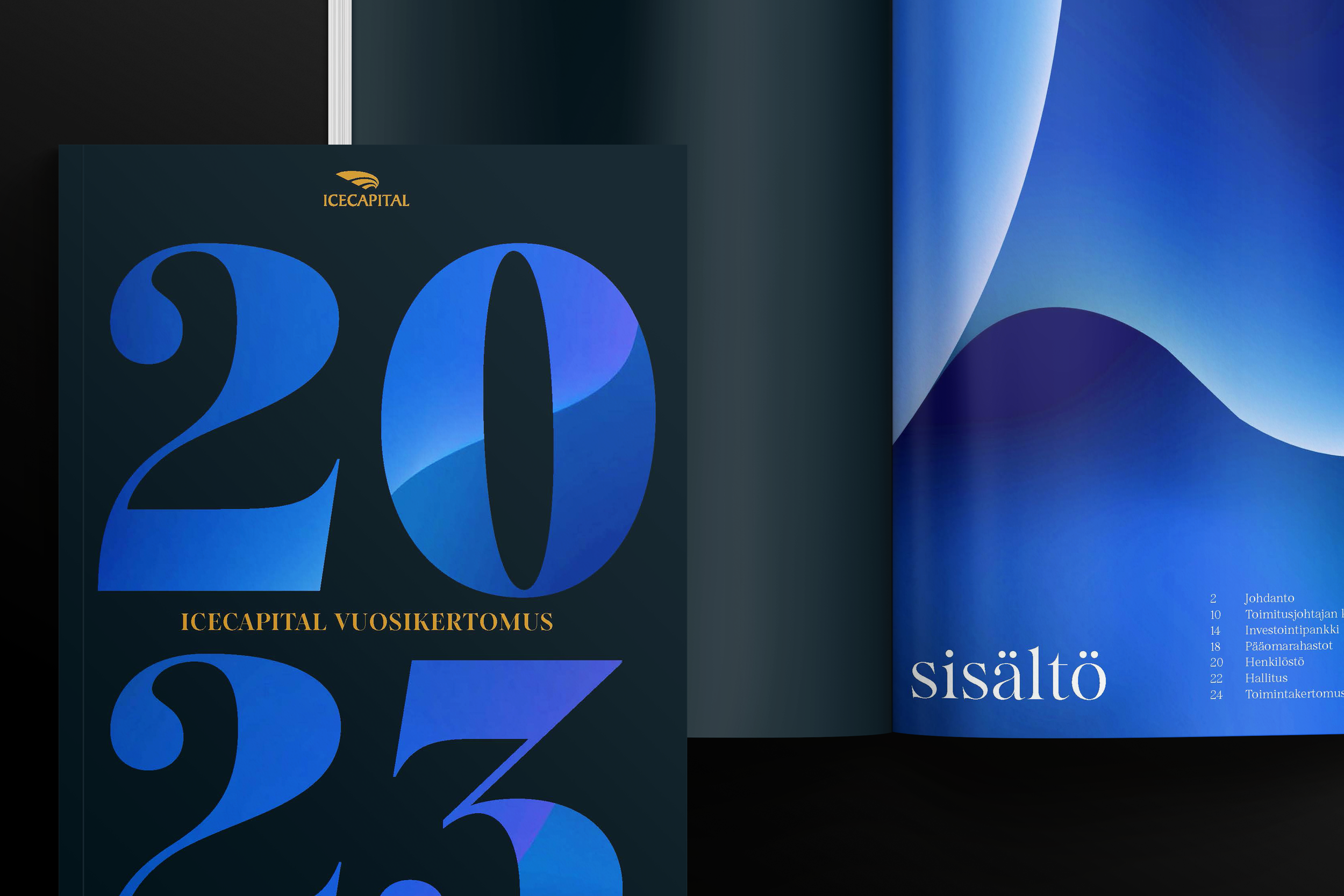
CASE: ICECAPITAL Financial Services since 2007
Nineteen years with one client. That's not a project, it's a partnership.
As Creative Director, I've led ICECAPITAL's visual strategy and brand evolution through every phase of their journey. Identity, annual reports and communications. But what makes this work meaningful is something deeper: when you stay alongside an organization long enough, creative direction becomes inseparable from trust.
I've seen their strategy evolve and designed the systems that make each evolution visible and credible.
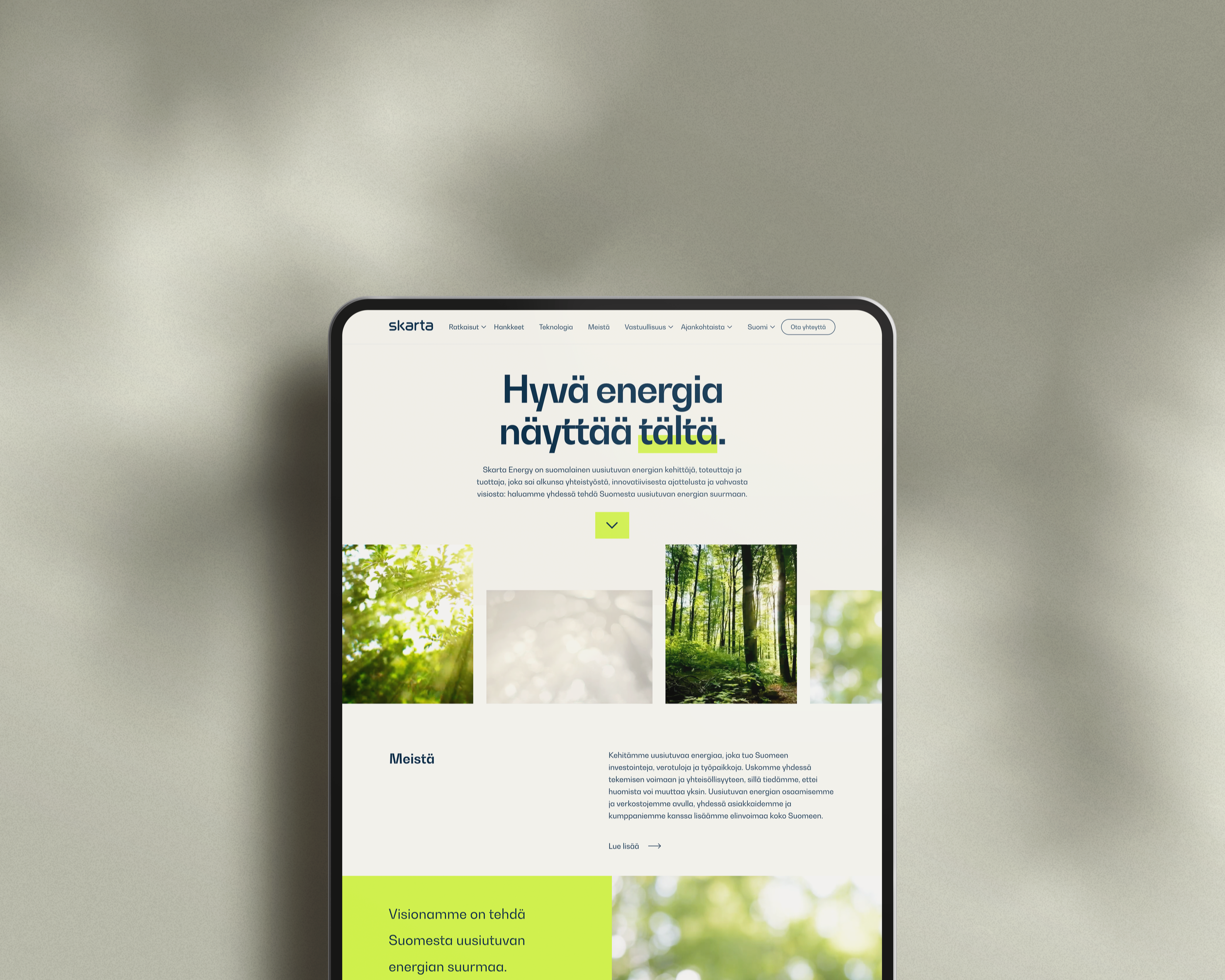
CASE: Renewable Energy Developer from new to credible
The gap: A young solar energy company with deep Finnish expertise but nobody knew it. They had the substance. They didn't have the story. And without a clear identity, every meeting started with explaining who they were instead of what they could do.
What we did: We started with what was already true: their expertise and their ambition. We built a website that tells their story clearly and showcases their projects. Then we went deeper — a brand guide, visual system, and practical materials that keep their voice consistent as they grow. Landowner brochures. Presentations. Newsletters. Everything designed to support their everyday work, not just their image.
The shift: Their marketing and communication is now unified. Their visual identity supports their growth. They don't look like they're figuring it out — they look like they know exactly who they are and what they do.
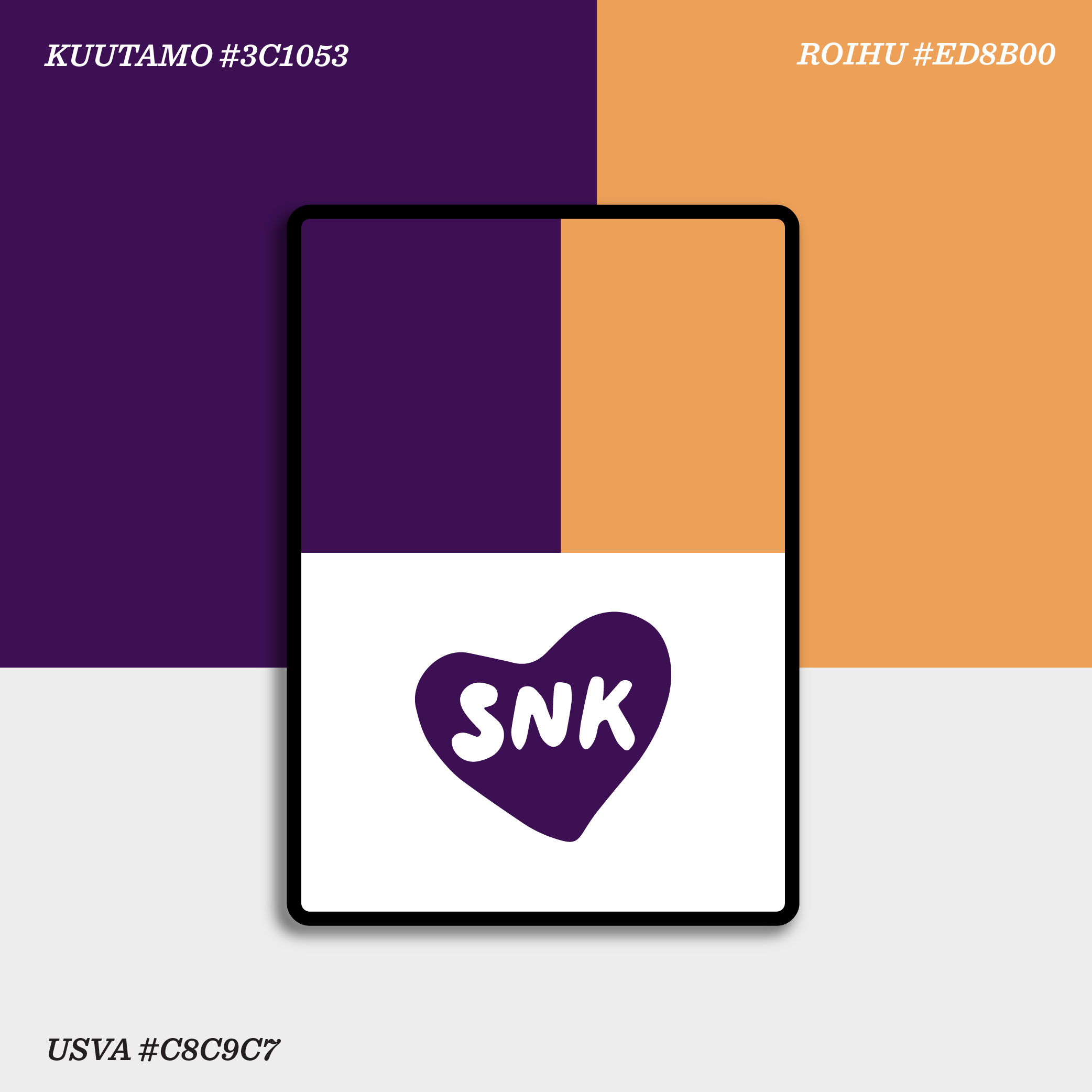
CASE: Youth & Education Organization from invisible to clear purpose
The gap: Finland's Youth Centers did important work. But they couldn't articulate why they mattered. Each center communicated on its own. The impact got lost in scattered messaging. The real problem wasn't design, it was that no one had stopped to answer the fundamental question: what are we actually for?
What we did: We started there. What is a youth center in Finland? Why do you exist? We did values work together and built a brand story grounded in what we found. Then we designed everything to make that story visible and consistent: identity, visual system, photography direction, campaign materials, social media content. We didn't hand them a guide and leave. We stayed alongside them as their communication evolved.
The shift: Each center now works within a shared narrative and visual framework, with room to be themselves. People understand what Youth Centers are and why they matter. They feel like a unified movement, not scattered initiatives.
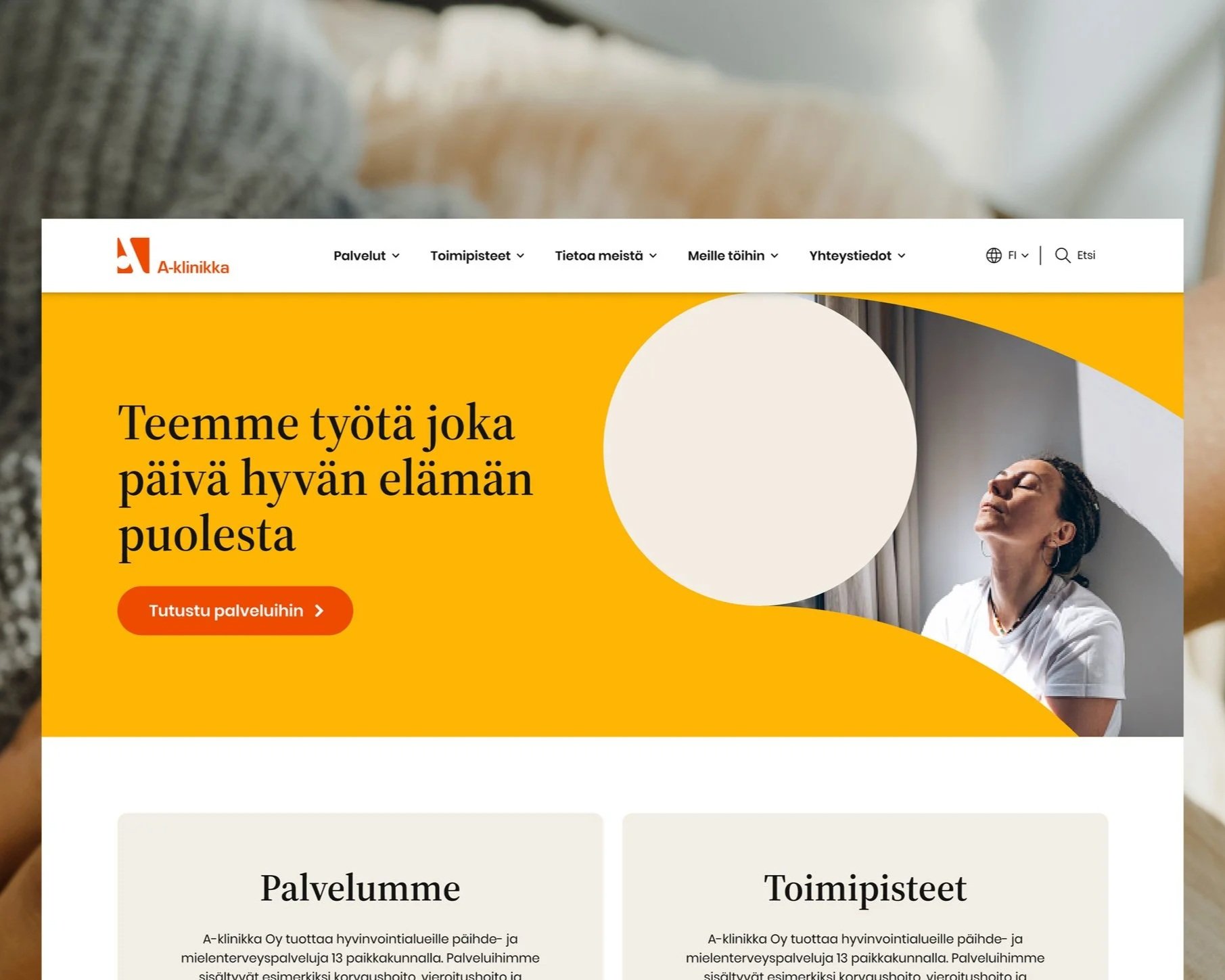
CASE: Health & Welfare provider from outdated to human-centered authority
The gap: They had clarified their strategy. Nothing changed. Leadership didn't visibly believe in the direction, and everyone could feel it. The problem was never the design.
What we did: We started with the harder question: why wasn't this moving anyone? We helped leadership get honest about where they actually stood. Then we designed the visual and communication systems to carry that honesty.
The shift: Frontline teams understood. Culture became intentional. The brand started to feel true.